

Everyone wants to talk about Nvidia. OK, let’s do it.
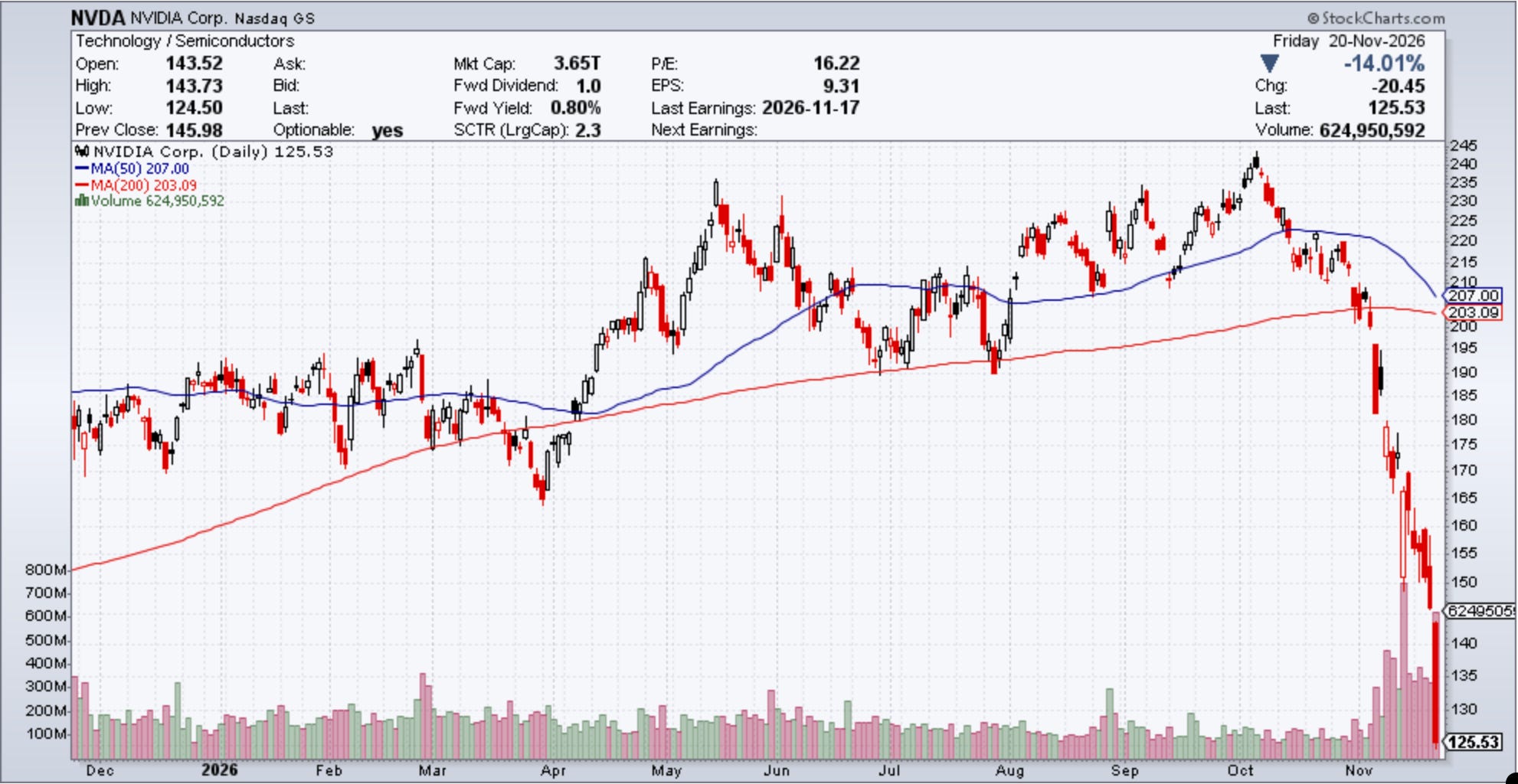
Is this a chance to “buy low” on a stock that’s been the bull market’s undisputed leader? One of the hallmarks of any late-stage bull market is the endless willingness of punters to gamble on upside. Default mode: optimism.
Social media is full of attention-seekers dealing in soundbites who are encouraging you to buy before you miss the boat on this stock, yet again.
The key to having a successful platform in 2026 isn’t to be smart, or insightful, or provide valuable information or opinions. Sadly, it’s all about making provocative statements that drive engagement, and Scott Galloway is an expert at creating this special brand of clickbait.
Calling Nvidia “the world’s most undervalued stock” is, of course, a silly statement designed to provoke. And so an investment-adjacent attention seeker uses it to generate clicks from a salacious spy-drama turned SEC accounting investigation.
The problem is that people managing their own portfolios give this stuff a level of deference and attention it doesn’t deserve, and often don’t have an advisor to temper their enthusiasm for buying “the world’s cheapest stock.”
Relying on any single metric to buy stocks is a mistake. And there is no statistic that has been as misused in this recent boom as the “price to earnings” ratio. If you bought Micron because it was trading at “2x earnings,” you are in a world of pain right now. It’s lazy analysis, period.
And this is before we consider the potential fallout from any accounting irregularities the SEC might discover.
Before blindly buying based on a P/E ratio, please pause and take time to understand the elevated risks that exist right now, and question whether the current earnings multiple is “cheap” in that context. I don’t think it is. And while Galloway cherry picks a couple of very expensive lower-growth stocks trading at elevated margins, he ignores the many stocks with better growth profiles and more durable business models trading at more reasonable multiples.
Let’s face it; investing in telecom, residential services, or old-school brands from your mom’s pantry won’t get the clicks that name-dropping Nvidia will. Ultimately, you are seeing these takes because they attract attention, and the more volatile the stock, the more attention it attracts.
As the A.I. buildout has expanded to touch many traditional non-technology industries, it’s becoming increasingly difficult for any investor to entirely avoid the fallout that is sure to come when the music stops.
Buying Nvidia right now might work out, but it’s playing the game on hard mode.
Why bother?
The key to building a resilient, long-term portfolio is to run away from the fire, not towards it.