

Last year, I wrote my first piece titled Hubris in response to Trump’s tariffs, which now seem harmless in comparison to the current mess in the Middle East.
My hopeful view on the tariffs was that the administration would see the folly of their ways and backtrack, and in many instances that is exactly what has happened. While never admitting they were wrong, the act of walking back imposed taxes and announcing “deals” to appease the market indicated that they knew that a country can’t tax its way to prosperity (despite the president’s proclamations to the contrary).
The tariff story is ongoing, but it has been eclipsed by the start of yet another war in the Middle East. Here, the stakes are higher, and the potential range of outcomes extraordinarily wide. This is what we call risk.
The dream of quick “regime change” has revealed itself to be illusory, but this only forces the US and Israel to double down. My own view is that this ill-advised adventure was prompted by surprising success in Venezuela, which emboldened another, significantly larger, gamble in Iran. So far, it’s not going as planned.
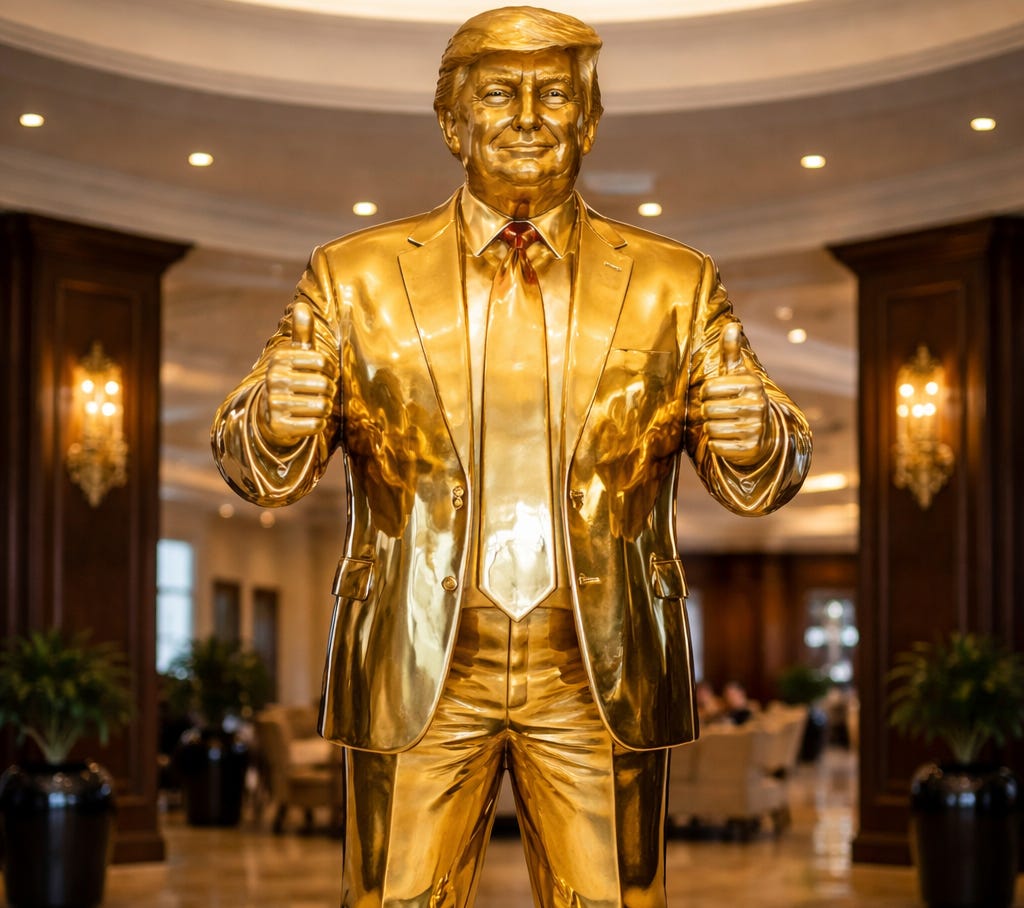
When you can’t just “cut your losses”
We warn against this in finance. Every trader knows that hot streaks always end, and loosening your risk management is a recipe for disaster. They also know that it’s a cardinal sin to turn a “trade” into an “investment.” The trader, unwilling to take a short-term loss, talks himself into believing that holding for a while longer is a good idea (“I’ll sell when I get back to even”). These adventures almost always last longer than expected, and often don’t work out at all.
The problem is, it’s not always as simple as hitting the “sell” button. In the case of Iran, it’s possible that an irreversible mistake has been made by people who were far too overconfident, and now committed to continuing along a path that has potentially catastrophic consequences for the entire world. A good dose of humility might have prevented this potentially misguided adventure. From this point, none of the options are good ones, and all leave us arguably worse off than we were a month ago.
Move fast and break things
Now the president is an entrepreneur at heart, of that there is no question. And a recurring theme in Low Risk Rules is the idea that entrepreneurs think about risk far more differently than the rest of us (and especially us financial analysts).
Whereas the job of the analyst is to try to consider every possible thing that can go wrong with an investment, an entrepreneur simply can’t think that way. They would be unable to act, paralyzed by fear and anxiety. They have to get things done regardless of the risks. That’s how Donald Trump got here. Yes, he’s racked up a lot of failures, but he certainly doesn’t dwell on them, and this is a key to the success of the entrepreneur.
The problem is that I believe that this personality trait is fundamentally flawed when it comes to making irreversible decisions like potentially setting off another world war. If the Iran war was a stock trade, and Trump an astute trader, the right move by now would have been to sell out, take your loss, and move on.
But it’s not, and he can’t.
As I wrote in Low Risk Rules: “The famous Facebook corporate motto ‘Move Fast and Break Things’ is a great philosophy if your goal is to foster innovation. But it is the antithesis to intelligent investing.”
I guess the same thing might apply to global diplomacy at the highest level, and with the highest stakes.
The weight of your decisions
On a much smaller scale than the president, the investment decisions I make are actually reversible (often at the cost of incurring a capital loss). But they still weigh heavy, because enough bad decisions have the potential to impact the ability of people to retire comfortably, or to reduce the amount bequeathed to heirs or charities. I spend a hell of a lot of time wondering which of my assumptions are wrong, and trying to adapt my world view to the facts I observe as they unfold.
I feel like that kind of introspection might have saved the world from the current situation: another quagmire that has already cost too much money and too many lives.
This isn’t about politics. This is about allowing your pride to lead you over the edge into the abyss. As I wrote last year:
All that we can really do is hope that the president’s instincts are correct.
I fear that they may not be.
But of course, I could be wrong.
I hope I am.
What to do?
Love this excerpt from Tony Deden (thank you Rudy Havenstein for the pointer):
It is easy and almost unavoidable to become caught up in the headlines of the day. We witness a raging war in the Middle East, having the potential to reshape energy flows, trade routes, and even more ominously, geopolitical alignments. It seems that it could even get much worse. The headlines command our attention, financial markets respond in real time, and narratives shift by the hour. It is natural to see each development demanding immediate interpretation. Yet, we are not served well by constant reaction. Instead, we need the kind of clarity that begins by stepping back from the noise and focusing on what actually matters over time.
Governments and politicians lie. The press lies. Treating official narratives as solid ground, especially in war, is a mistake. In wartime, truth is obscured by design. Information is delayed, manipulated, framed for effect, stripped of context, and turned into propaganda. Each side presents its own story. Reporters recycle claims they cannot verify and analysts mistake access for insight. The videos that circulate on social media are often AI-manufactured. As a consequence, we are left trying to build certainty out of fragments, contradictions, and deliberate distortions. There is no denying of this reality.
In such an environment, one can spend endless energy sorting claims, disputing events, parsing official statements, and chasing “breaking news,” only to discover days or weeks later that the underlying picture was very different. In my view, the more important discipline is not reaction but inference. If truth in the moment is obscured, consequences are not. They unfold with a logic of their own. Ergo, the essential task is to think forward.