

Last week I explained why I’m steering clear of the AI infrastructure story.
Today, I’d like to briefly expand on that. Because too often, when people see a market that is rapidly growing, they chase it, hoping for a quick profit.
It can work… until it doesn’t.
Boom
Imagine you own the only hotel in a small town. One hundred rooms, steady occupancy, and decent pricing power. The only game in town.
All of a sudden, a massive music festival sets up in a farmer’s field just down the road. Tens of thousands of attendees clamour for rooms. For a couple of glorious weeks, room rates go up 10x, and bar and restaurant revenues soar.
Word on the street is that the Hard Rock is considering opening up down the road. You’ve got to take advantage of this before the competition moves in. So you build a new wing, doubling capacity. No problem, because at the rate you’re earning, it will pay for itself in a few years.
For the next year or two, it pays off. And then the festival decides it’s outgrown the farmer’s field and moves three hours away. All of a sudden, you’re left with capacity you’ll never fill, and a debt hangover from the massive construction project.
You limp along for a few years, and then ultimately succumb to the climbing interest payments, putting the property up for sale. What was supposed to be your road to riches ended up in ruin. You’d have been better off if that God-forsaken festival never showed up.
Bust
Most recently, we saw a similar story play out during Covid, when investors chased vaccine makers. Imagine a worldwide total addressable market! Imagine a future where annual “boosters” were required to maintain herd immunity! Where governments actually forced citizens to take your vaccine!
Seemed like a no-brainer.
But reality intervened.
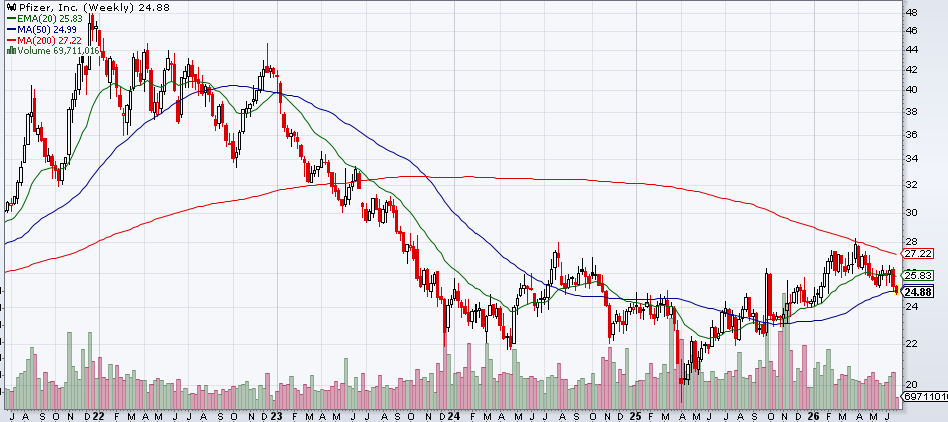
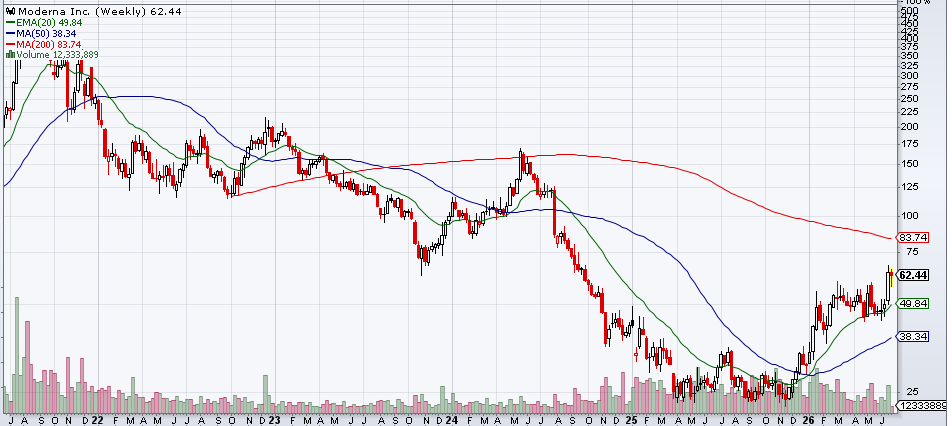
Pfizer and Moderna are both well below their pandemic-era highs.
What seemed like an easy, obvious win, has turned into massive losses for shareholders.
What happened?
The problem is that managing through an accelerated growth period is extraordinarily difficult to do.
During the pandemic, Pfizer and Moderna were supplying critical products to a panicky and price-insensitive customer base. Demand was urgent, and capacity was scarce. And so they did everything they could to build infrastructure and supply chains for future demand that never arrived. Vaccine demand “normalized” far faster than anyone expected it to (“normalized” is the polite finance term for demand falling off a cliff!)
The companies were left with inventories, supply commitments, cost structures, and investor expectations built during an abnormal period. That is the risk in semiconductors too. The boom may be real, but the question is whether companies are building for a realistic future, or for peak demand projected as destiny.
What’s the exit plan?
As a small investor in these ventures, you could have made money if you knew when to cash in your chips. That time, generally, is when the story is strongest. When nobody believes that the good times will end.
What we end up with here is a high stakes game of musical chairs. As each punter owning shares decides they’ve had “enough,” they take a seat. Holding on for just a bit longer might pay off handsomely, but when others notice that the number of free chairs is dwindling, the rush to take a seat intensifies. Ultimately, the only ones left playing are those who stubbornly refuse to believe that the chairs are all taken.

Sometimes, the long-term holders end up holding nothing but a crap-filled bag. If you’re participating in this mania, make sure you have an exit plan, and stick to it.